
A promising enquiry can survive an expensive campaign, complete a detailed form and request a conversation, only to disappear after being labelled “ready for sales”. The problem often sits between teams. Marketing records a conversion, sales sees an incomplete contact, and neither side notices that no useful conversation followed.
A handoff needs more than a new CRM status. It requires an agreed qualification rule, enough context, a named owner and a deadline for the next action.
Qualified Does Not Mean Accepted
Marketing and sales often use “good lead” differently. Marketing may prioritise behaviour: a prospect attended a webinar, viewed pricing and requested a demonstration. Sales may care more about company size, purchasing authority, location or an active project.
Both interpretations can be reasonable. Trouble begins when the distinction remains undocumented. Marketing reaches its target by generating marketing-qualified leads, while sales quietly rejects many of them as unsuitable. The dashboard shows movement; the customer experiences silence.
A lead should cross the boundary only after the teams agree on the evidence required. A form submission may be enough for a simple service. A complex business purchase may require a suitable organisation, a stated need and a reachable decision-maker.
A Queue Is Not an Owner
Automation can place a new record in the correct CRM queue, but a queue cannot make a call. Someone must accept responsibility. Territory rules, staff absence, duplicate records and unclear account ownership can leave a lead visible to several people but claimed by none.
The most common breakdowns have recognisable symptoms:
| Symptom | Likely handoff failure | Useful control |
| No first contact | No named owner | Automatic assignment with an exception queue |
| Generic opening message | Enquiry context was lost | Required handoff summary |
| Two representatives respond | Duplicate or conflicting ownership | Account matching before assignment |
| Lead returns to marketing | Rejection reason is missing | Standard reason and review date |
A strong process treats assignment and acceptance as separate events. The CRM should record who received the lead, who accepted it and when the first meaningful action became due.
Context Disappears Before the Contact Does
A salesperson needs to know why the person raised a hand. Passing only a name, email address and lead score removes the clue that made the enquiry valuable. A prospect who asked about migration may receive a broad product introduction. Someone who downloaded an introductory report may receive an aggressive closing call.
Useful context includes the original source, recent activity, stated problem, relevant product and any promised follow-up. It should not become a transcript of every website visit. The purpose is to support a relevant opening conversation, not bury the representative in activity data.
Consent and communication preferences must travel with the record as well. Moving a contact between systems should not erase an opt-out or turn permission for one type of message into permission for another.
Rejection Without Feedback Repeats the Error
Rejected leads are operational evidence. If sales marks every unsuitable record “not interested”, marketing cannot tell whether the problem was poor targeting, bad timing, missing authority or an incorrect territory. The next campaign then sends similar contacts into the unchanged broken route.
HubSpot’s lifecycle-stage documentation distinguishes a marketing-qualified lead, considered ready by marketing, from a sales-qualified lead that sales regards as a potential customer. That distinction is useful only when each business defines its own entry and rejection criteria.
A rejected lead may still deserve structured nurturing. “No budget this quarter” calls for a review date; “student research” may require no sales follow-up; “existing customer” belongs with an account team. One vague status cannot support those decisions.
Build an Acceptance Process
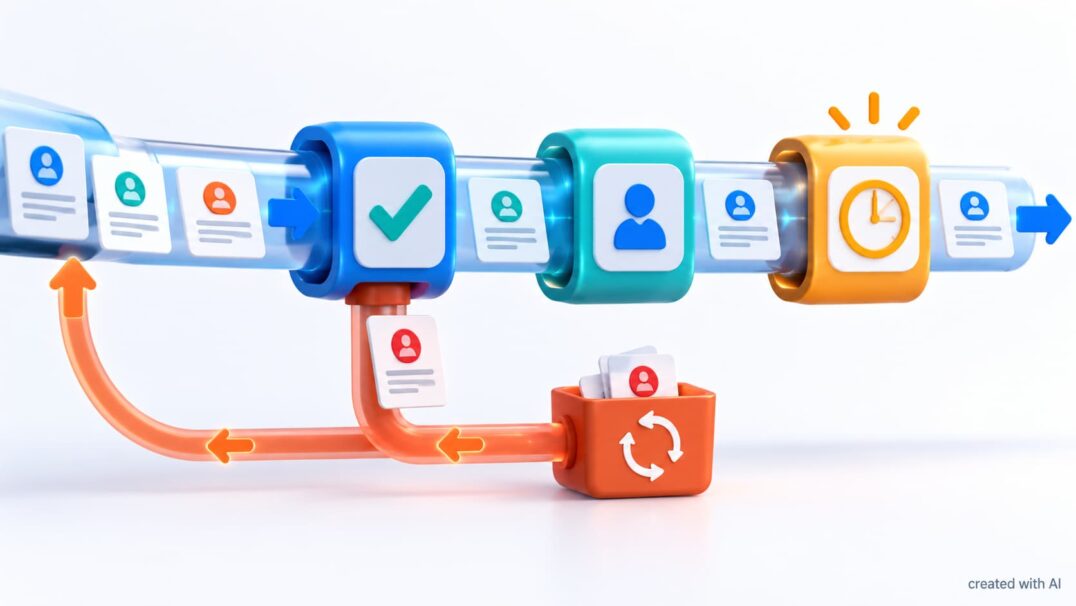
The handoff should behave like a short transaction rather than a notification. A workable design includes:
- Marketing applies documented qualification criteria.
- The CRM checks duplicates, territory and existing account ownership.
- A named representative receives the record and supporting context.
- The representative accepts or rejects it by an agreed deadline.
- rejection requires a reason, while acceptance creates the next task;
- overdue records move to a monitored exception queue.
This sequence creates evidence at every stage. It also separates a routing failure from a performance problem. A correctly assigned lead that receives no action needs management attention; an unassigned lead points to a rule or data issue.
Measure the Gap, Not Only the Result
Revenue and conversion rates reveal the eventual outcome but can hide the precise location of a leak. Handoff reporting should track the time between qualification, assignment, acceptance and first meaningful response. Acceptance rates by source, rejection reasons and overdue records show whether lead quality or process design needs attention.
A meeting between marketing and sales becomes more productive when it reviews individual records rather than arguing over totals. Ten rejected leads with clear reasons can reveal a faulty form question, an outdated territory rule or a campaign attracting the wrong organisation size.
Good leads rarely disappear mysteriously. They wait in queues, arrive without context, reach the wrong owner or receive no timely decision. A visible acceptance process turns that uncertain gap into a managed part of the sales operation.